Tuesday, June 26, 2018

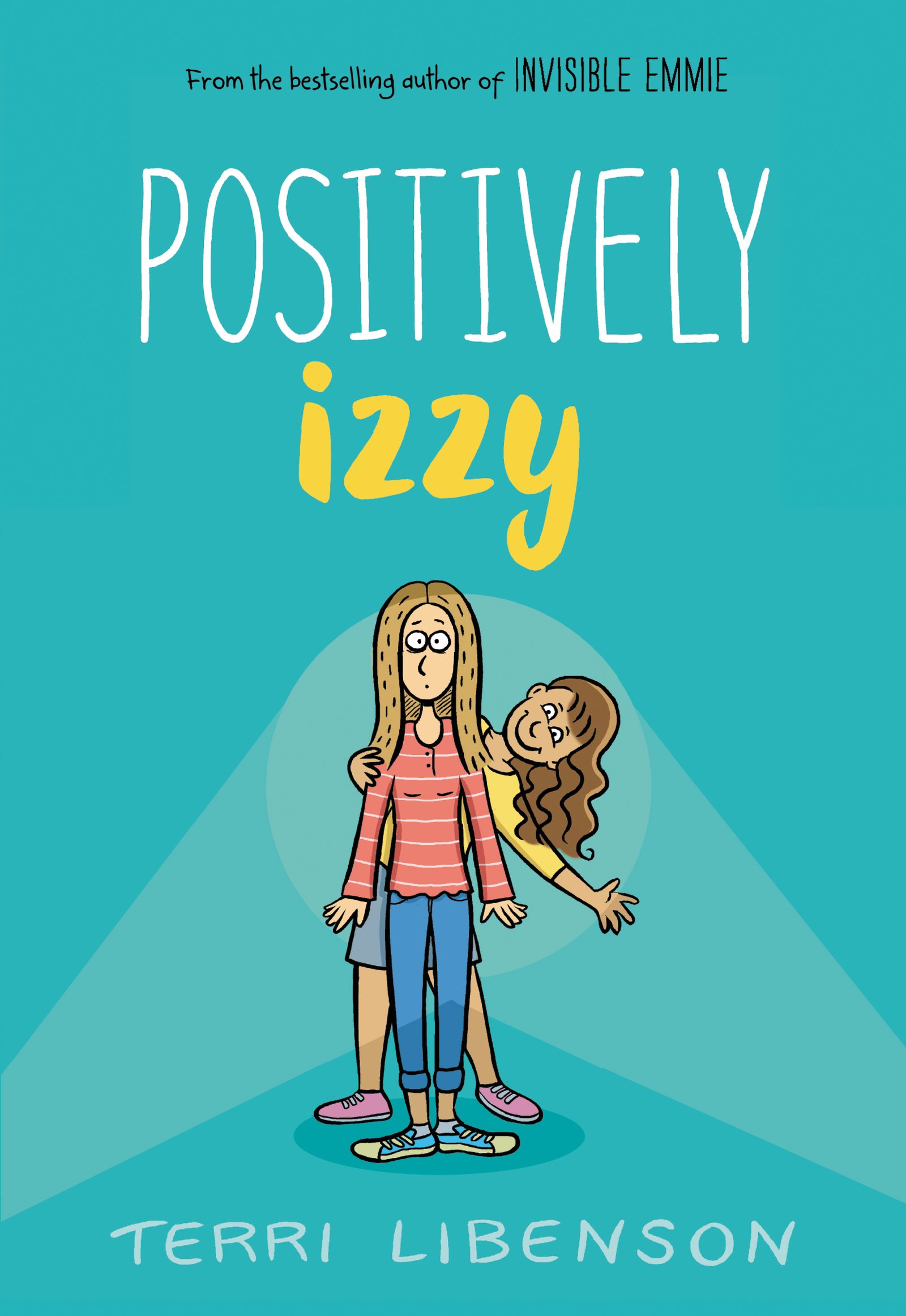
Positively Izzy, by Terri Libenson

Image result for positively izzy


Brianna (Bri) is a brain, a little Einstein. She likes that she gets good grades, but wants people to know her for who she is on the inside, rather than judging her for pen markings on papers. She doesn't want to have a label stuck on her. 

Izzy is a dreamer, a pure artist. She likes to write stories and loves to act, enjoying the way she change herself, just throw away her identity and take up someone else's. But she isn't exactly an "A" student.

Bri is dreading the school Talent Show. Her mother, the drama teacher, has always been pressuring her to try acting as an activity, but Bri hates to act. Then, on the day of the show, Bri's mom comes up to her and says, "One of the talent show entries is a group of 7th graders doing short, interrelated scenes from a play. There's a two -person scene... and an actor got sick." Bri knows what she is going to say next. "They need a last-minute replacement."

Izzy, on the other hand, can't wait for the school Talent Show. She's been practicing her act for days, and she knows she's ready! But one day, at school, she forgets to do a "mandatory" assignment for math, earning a zero, again. She plans to hide that fact from her mom, but her mom discovers the assignment lying on a table, and punishes Izzy for the zero by telling her she can't go to the Talent Show. 

Brianna and Izzy don't exactly know each other at the moment, but soon, their lives will meet in a rather unexpected way...

I can personally relate with Izzy in one or two ways. I do forget assignments and try to hide that fact from my parents, but they eventually find out and punish me for it. And I can't always focus in class. I can relate with Bri in that I do get good grades (straight-A 7th grader, thank you very much!), I don't like acting, and I have parents who pressure me to do things that are out of my comfort zone.

You see, Bri and Izzy are just your two average 7th grade girls. They don't have superpowers, they aren't especially popular, and they enjoy simply to be with their friends and family. But this story of two average girls and their average lives is both surprising (wait until you read the ending!) and likely to put a smile on your face.

Positively Izzy is a graphic novel for ages 9-12. If you are a fan of Raina Telgemeier's SmileSistersDrama, and Ghosts; the well-known Babysitter's Club series; or Sunny Side Up and Swing It, Sunny by Matthew and Jennifer L. Holm, then here is my 100% guarantee that you will like this book.

So read on, and remember, be positive!

-------------------------------------
 
Daddy's afterthoughts:  

"I do forget assignments and try to hide that fact from my parents..."

Say what, now?

Wednesday, May 23, 2018

Nothing but the Truth, by Avi


Ninth-grader Philip Malloy thinks about one thing: track. His ambition to be in the Olympics keeps him running (geddit?). And his love for running brings on a chain of events that is different from what he first imagined.

Philip hates English class (and homeroom). He hates his English (and homeroom) teacher, Miss Narwin, because she can't take a joke. And when the winter term exams roll around, she gives him a D on the report card due to his disrespectful, mocking answers on the exam, as well for his lazy work in class.

That one D changes everything.

A few days later, Philip tries to sign up to join the track team, but is denied because of his grades: his English grade, to be specific. The rule is that to join a sports team, you have to have a passing grade in every class, and a D is not considered a passing grade. Philip, outraged by the act that he can't join the team, searches for a way to get transferred out of her classes. He finds a way very quickly. 

Every day, in Philip's high school, Harrison High, during homeroom, a tape of "The Star-Spangled Banner" is played on the sound system. Every morning, just before the tape is played, the principal, Dr. Doane, says "Please all rise and stand at respectful, silent attention for the playing of our national anthem." 

On Wednesday, March 28, during the playing of the tape, Philip starts to hum along. Not loud, just to himself. Miss Narwin yells at him to stop, so he does. For two more days, he does the same thing -- he hums along with the tape -- and he gets suspended from school for two days for not following school policy of standing for the anthem in "respectful silence."

While on suspension, Philip's father takes him over to their neighbor's house at the moment their neighbor is talking to a reporter about the upcoming school board election. Their neighbor invites them in, and Philip and his father tell the reporter about the suspension, and the reason why.

The next day, an article appears in the newspaper, in the school section. The title reads "Suspended for Patriotism." 

Over the course of a few days, the story is spread all over the country, on the news, in the papers, and on the radio. It seems that the whole nation wants to hear about the kid whose teacher suspended him for his sense of patriotism. Letters and telegrams arrive for both Miss Narwin and Philip, from all over. Miss Narwin receives hate-mail, while Philip receives letters of support. 

But somewhere along the line, the story has gotten twisted. What is the truth, and what are the lies?

Nothing But The Truth is a fantastic story about the multiple sides to one event. Philip tells his side of the story first, so whoever wasn't a witness to the event believes him. People believe what they're told, and have an irritating habit of not checking the facts before they spread a story. After a while, the spreading of his version of the story has consequences he does not intend.

Perhaps what is the most unique part of Avi's novel is the style of the writing. Much of it is formatted like the script for a play. Plus, there are images of memos, newspaper articles, discussions, diary inserts, and letters mixed in. This "documentary novel" is different -- it's not just paragraphs put together into chapters like most novels --  but is great for ages 11+. There is no profanity, aside from one use of the "b" word. 

Does it sound intriguing to you? If so, go ahead and read it. But before you do, one question:
"Do you swear to tell the truth, the whole truth, and nothing but the truth?"

-----------------------------------
Daddy's afterthoughts:  This is an amazing non-traditional novel. Actually, for kids who have cut their teeth on books like the Diary of a Wimpy Kid series, where the text is a melange of prose, snippets and excerpts of documents, drawings, etc... this particular way of cobbling together 150 or so pages of text should not at all be disorienting. What Avi calls a "documentary novel" is really a version of an epistolary novel, and there are a lot of other contemporary examples for tween and teen readers. What I love most about this book, more than the way the consequences of Philip's actions and choices snowball, is the final dozen of so words of the novel. I won't spoil them, so don't be tempted to read the last page first (as some are wont to do), but save the last few sentences for the impact they will certainly have.


Monday, April 30, 2018

I Am Princess X, by Cherie Priest

Image result for princess x book cover

Libby and May have been friends since the fifth grade. Libby is a great artist. May is a good writer, but she can't draw for crap. She says so herself.

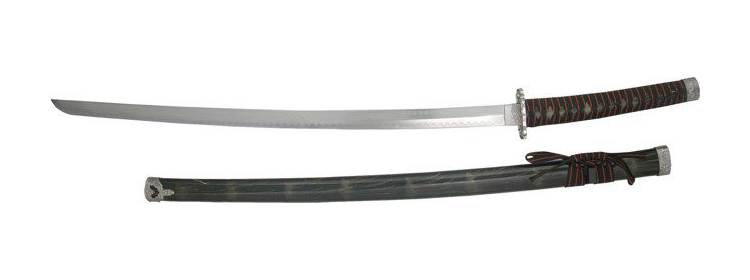
Their friendship isn't the only thing that started in the fifth grade. Princess X started there too. She wears a pink dress, red Chucks, a crown, and carries a katana. She lives on a hill, in a haunted house, and has ghosts as friends. She started as a sidewalk drawing, and eventually morphed into a full-fledged character. Libby and May have written and drawn hundreds of Princess X comics.

And then, one night, Libby's mother is in a car, driving over a bridge, with a rushing river underneath. Libby is with her. The car goes over the side, into the water, and Libby dies.

Three years pass, and now May is sixteen, lonely, filled with longing for her friend, and haunted by dreams that say that Libby didn't die that night, that she broke free, and swam to the surface. But May doesn't believe herself.

Until she sees the sticker on the window of a building about to be demolished.

Is it possible? Can it be? The sticker is Princess X! But how? Libby is dead... isn't she?

Princess X stickers, Princess X patches, and Princess X graffiti art start popping up everywhere. But the most intriguing of all is a webcomic on a website called www.iamprincessx.com. May starts to see more and more connections between the webcomic and Libby's "death." 

Because Libby is alive. What May's dreams have been telling her is true. Well, maybe.

I Am Princess X shows just how far a friendship can go. May doesn't give up on Libby when everyone else thinks her dead. May struggles to prove that Libby is alive. Throughout the story, May collects clues and makes shocking discoveries, all in an effort to solve the mystery of Libby's disappearance. And May shows us one thing: When the world tells you to give up, to quit trying, don't.

I first read this book when I was around 10, and I loved it. I read it over and over. I just pulled it off the shelf after a year or two, and it definitely is for a slightly younger reader, ages 9-11, maybe 12. I still liked it, but I have moved on to more grown-up books. Still, it was fin to re-read. The book is definitely "cool" - the artwork is cool, two of the characters are hackers, and this will appeal to a lot of readers. Just read it before you outgrow it!
-----------------------
Daddy's afterthoughts: This was Julia's favorite book for a good six months after I bought it for her (that's a long time, for her...) when she was 10 or 11. Everything from the colors of the artwork, the strange fusion of novel and graphic novel styles, to the hacker-chic aesthetic, to the quirky style of Princess X's getup and X's super-cool Powerpuff Girls-esque bravado and stance simply screamed "high-interest." I wonder if the title will scare away male readers; if so, it should not. Boy or girl, whether your bag is anime, superheroes, or cartoons of the Powerpuff Girls' extended universe variety (Powerpuff Girls, Dexter's Laboratory, Samurai Jack) and the like, this book will be a hit. Yes, it almost certainly was written to target tween girls (say 10-12-ish), but that should not stop anyone who likes this kind of storytelling.

Saturday, April 21, 2018

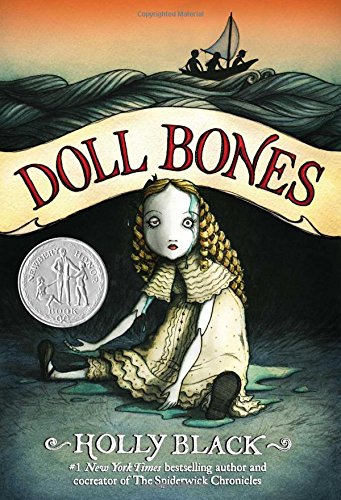
Doll Bones, by Holly Black

Image result for doll bones

Zach, Poppy, and Alice have played a make-believe game (which has no name) together for years. Their game uses action figures as the characters, and a bone china doll whom they call the Great Queen. The Great Queen has the power to curse anyone who displeases her, well, in the game anyway. 

But Zach's father thinks that Zach should "grow up" and stop playing with action figures and play more basketball instead. Zach's father decides to take matters into his own hands, and throws all of the action figures into the trash without telling Zach, while Zach is in school.

When Zach gets home after school and realizes his figures are gone, he gets mad. And then he realizes that without his figures, he can't play the game anymore! This is terrible! Zach and the girls are the best of friends, and this has been their tradition for years. What can he do?

Zach decides to lie to Alice and Poppy about why he can't play. He simply tells them that he doesn't want to play anymore. After that, ties are split for a while, until... 

A few days later, Poppy announces that she's been dreaming about the Great Queen; she dreamed that the Queen was actually the ghost of a little girl named Eleanor, and that Eleanor had told Poppy that her spirit needed to rest. But that can't happen until the doll is laid into Eleanor's empty grave.

The grave is empty because Eleanor's father took her bones and made them into the doll. 

The three friends go on an adventure to East Liverpool, Ohio (the location of the grave), by boat and bus, in hope of finally letting Eleanor's spirit rest, and on the way, they discover things that they never knew about each other...

Doll Bones is (yet another) novel about a trio of friends going on an adventure. The author perhaps borrowed the "haunted doll" thing from the "Child's Play" movie series (?), except this doll doesn't kill anyone. Not that kind of book.

The book is a bit creepy, and the front cover illustration makes it look like a horror novel. This book would fall under the "horror" category... if you were eight years old. For anyone over eight, this novel will be a suspenseful adventure story. Doll Bones may give you a feeling, a leering feeling, like there is just something there, waiting for you... 

----------------------------

Daddy's afterthoughts:  This 2013 Newberry Honor book is the product of Holly Black, who co-created the Spiderwick Chronicles. This book has been decorated with a veritable slew of awards. It's a spooky read for younger readers, but older pre-teens will like it just fine. But it's not just a creepy-spooky story that involves a haunted or possessed doll; this is also a story about relationships and friendships in the tween years, that awkward time between childhood and teenager-dom. A wonderful read for ages 8-13.

Friday, April 13, 2018

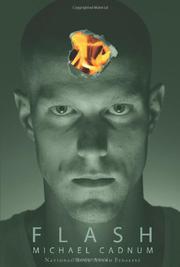
Flash, by Michael Cadnum

Image result for Flash book by michael cadnum grade recommendation

Bruce, 16, and Milton, 18, are brothers, and the type of high schoolers that always get into trouble. Bruce gets into fights, and Milton gets arrested. In fact, Milton and Bruce are planning a robbery even though Milton hasn’t even had a trial from his last crime. But it's not what you think... they're not "bad" guys.


When they get to the bank that they want to rob, Bruce gets out of the car that they used to get there, and which will also act as their getaway car, and everything seems to go fine. Until Bruce tears out of the bank, with a practically empty sack, and tells Milton to drive. They get 3 blocks away when the bag explodes. The teller had sneaked a dye bomb into the bag. And now they have useless money, and are covered in neon green dye.


They bury the evidence in their backyard. But they haven’t buried the soiled wealth unnoticed, though. Terrence, an “almost legally blind” neighbor, has heard them and recorded their conversation while out bird-watching. (Actually, he doesn’t really “watch” them. Since he is nearly blind, all he can do is record their songs and the sounds they make. But this is why he has his recording equipment with him.)


Bruce and Milton know that they are in trouble, because Terrence had been recording birds while they were burying the money, and Terrence may have recorded their conversation too. What Bruce and Milton didn’t know was that Terrence told his girlfriend, Nina, and her brother, Carraway, a soldier back home from the War after surviving a tank explosion in Iraq. Carraway is “a stickler for law and order.” Carraway knows that Bruce and Milton attempted to rob a bank, because Terrence told him. And he’s not too happy about it.


The dust jacket says that Flash is based on an actual robbery that the author witnessed. I liked the way the narration is in the third person, but the point of view switches from seeing Nina’s side, to Milton’s side, to Terrence’s side, and back again, as if someone were recording their thoughts and words. The novel talked about the crime from the criminals’ perspective, and I liked that too – it is not something you see a lot: Bruce and Milton are motivated by the need to get money for their family, not just to be "bad guys." Ever since an explosion at the sugar refinery killed their father, their family has been very tight on money. The insurance company forced the family to take only 1/3 of the payment they were due. The insurance company knew that he had nothing to do with the accident, and was just ripping the family off. They told them they could take 1/3 or take nothing. What choice did they have? Now they are poor, and their mother is sick (and lacks the money to get proper medical help). 


I found this in a “horror” section in the library... which is weird. This book is not scary, other than the mildly disturbing cover image. Michael Cadnum used a real event to write a “thriller” that in my opinion was not super-thrilling. But don’t let what I say get in the way of if you want to read it, if you like crime thrillers or detective stories, that type of thing. By all means, go right ahead!


-------------------

 Daddy's afterthoughts: Julia was not especially enthralled with this one, but it's not really her genre of choice. Kirkus rates the book highly, praising its "unpredictable resolution that brings the cast to the end leaves room for reflection on motivation and character in hard times." Bob's Book Blog calls Cadnum's writing "vivid and evocative" and calls it a "brilliant story for teens and reluctant boy readers." Well, Julia is neither a reluctant reader, nor a boy, so maybe that's it. The book is gritty, realistic fiction, not the fantasy and dystopian fare that is de rigueur in YA fiction these days, so if you are looking for something in that vein, there you go.

Saturday, March 31, 2018

The Tale of the Shining Princess, traditional (adapted by Sally Fisher)


Life was dull for the old bamboo cutter and his wife. They were poor, lonely, the old man was overworked, and their life was very dull. Dull that is, until one day when the bamboo cutter noticed that one bamboo stalk was glowing. The old man, bending over for a better look, saw that a 3-inch tall girl was inside the stalk of bamboo!

The old man and his wife had never had any kids, so of course they were pleased. They named the girl Nayotake no Kaguya-hime, the Shining Princess of the Young Bamboo. As the child grew into a young woman (this taking only 3 months), it became clear that she was one of the most beautiful women in the world, so beautiful that she seemed otherworldly.

After a while, the old bamboo cutter decided that it was time for Kaguya-hime to marry. Word of her beauty had spread quickly, and year after year men came to her home if only to catch a glimpse of her. Finally, after many years, all except for 5 of the most determined men had left. These men were Prince Ishizukuri, Prince Kuramochi, the Minister of the Right Abe no Mimuraji, the Grand Counselor Otomo no Miyuki, and the Middle Counselor Isonokami no Marotari. These 5 men each were given a task to prove their devotion to Kaguya-hime. Prince Ishizukuri was sent to find the begging-bowl of the Buddha, Prince Kuramochi was sent to find a jeweled branch of Paradise, the Minister of the Right Abe no Mimuraji needed the robe of Chinese fire-rat fur, the Grand Counselor Otomo no Miyuki was to get a 5-colored jewel from a dragon's head, and the Middle Counselor Isonokami no Marotari was asked to retrieve the easy-birth charm of the swallows

You can probably guess that Kaguya-hime did not want to marry, as the items that she sent the men out to get do not exist. The next 5 chapters describe the journeys of the 5 men; all of the journeys were rough, and most lasted several years. In the end, Kaguya-hime marries none of the men, as a surprising truth about her real identity is revealed.

The Tale of the Shining Princess is an old Japanese legend of this otherworldly woman who comes down to Earth. In this story, there are several poems written by Kaguya-hime and the 5 men mixed in with the storytelling, as well as several beautiful paintings describing the story. The original album of the paintings in the story is in The Metropolitan Museum of Art. The original author is unknown, and this version is based off of a translation.

While The Tale of the Shining Princess is not a long story, young people and anyone who has trouble reading foreign languages may stumble over some of the names. But other than that, this legend is great for lovers of mythology (like me)! 

---------------------
Daddy's afterthoughts: I first found this volume on a shelf of cast away books at a take-a-book-leave-a-book station at a local college. What a treasure. The color plates alone make the book worth owning, Edo-era Japan illustrations of scenes from this thousand-year-old tale, thought to be one of Japan's oldest legends.

This version, published by the Met, contains a text by Sally Fisher, an adaptation of a translation from the Japanese by Donald Keane. The story itself, believed to date back to the 10th century (circa 909, according to Haruo Shirane's Traditional Japanese Literature: An Anthology), but even that telling was itself an embellished iteration of an earlier oral folk narrative, its origins likely lost to antiquity. Curiously, its original (10th century) title was 竹取物語Taketori Monogatari, or "The Tale of the Bamboo Cutter," the emphasis on the male bamboo cutter, and it is perhaps worthy of note that later iterations of the tale bore titles such as "The Tale of Kaguyahime" or this, "the Tale of the Shining Princess," with the focus (more appropriately, perhaps) on Kaguya-hime herself.

On a broader note, I love mythology, and recommend its reading for all age levels, but especially children. No other form of storytelling conveys as much wonder, as much of a sense of what C. S. Lewis called "the numinous" as myth. This particular volume clocks in a 70 paginated pages, making it somewhat longer than your normal short-story-length myth, but much shorter than a novel. Its simplicity makes it a great read for children, but its style and the beauty of the language held me rapt when I first read it as a man of 40 or so years. It's a tough book to find, but thanks to the internet, this volume may be had (secondhand) from a variety of sources.

Thursday, March 15, 2018

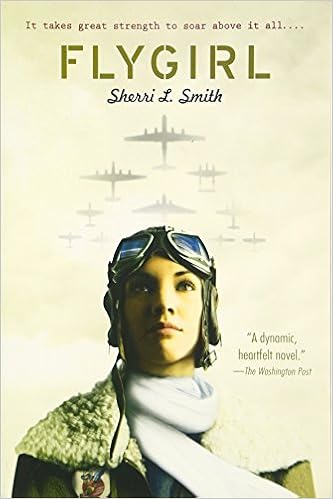
Flygirl, by Sherri L. Smith

Image result for flygirl

Ida Mae Jones's biggest dream is to fly. Being happiest in an airplane, she has wanted to fly since she was a child. And there wouldn't be a problem, if she weren't living in the segregated South. No one would give her a license for two reasons: She's Black, and she's a woman. 

When the USA enters WWII, Ida's brother heads off to serve in the Army, leaving his family behind. An Air Force group is formed, known as the Women Airforce Service Pilots, or WASP for short. Ida wants to sign up, but would they hire a Black woman? Probably not, except Ida has skin fair enough so she might be able to "pass" as white. So she decides to sign up to be a WASP, and do what she's always wanted to do: fly.

She's accepted, but from the moment she leaves home, Ida is scared that someone will see that she is Black. 

When Ida and the rest of the women arrive at Avenger Field, they are told that the 5-month training course won't be easy, and that about two-thirds of them will wash out by the end of the course. Ida immediately makes two new friends, Pasty Kake and Lily Lowenstein. Throughout their training, these girls help each other out the best they can.

Two days after their arrival, there is the first sign that this course would be hard: two candidates wash out. One or two days later, after a flight test, another woman washes out. The trainees are dropping like flies.

Ida, still worried that someone would notice that her skin tone is a bit darker than everyone else's, has had the good fortune to do well and pass, but how long will her luck last? Will she become a full fledged WASP? Or will she be discovered? She doesn't like pretending to be someone she's not. She doesn't like to lie, even if lying helps her pursue her dream. Deep inside, she feels like she is denying that she is related to the rest of her family by denying her race. Not even the WASP friends she makes know her secret.

WASP was a real program put into place during WWII, a time when most men didn't like to see women in the Army, Navy, or Air Force. It was also a time when women were finally beginning to prove those men wrong. Not all women back then wanted to live a life in the kitchen. Some of them wanted to get out of the house, to see the world. And some of them did.

This historical fiction novel is great for any age able to read a 275-page book, but parents out there should know that there is some discussion in the book of female development (menstruation, pregnancy). 

Ida Mae Jones teaches us that neither race nor gender should keep you from doing what you dream about. But she also teaches us that feeling forced to be something we're not, denying our identity, can be painful.


--------------------------
Daddy's afterthoughtsMulanYentlTootsie, and Terri Griffith (a nod to Just One of the Guys, the cult-classic 80s teen romp directed by my cousin, Lisa Gottlieb). All stories where the stars swap gender to achieve some purpose denied them by some stereotype. But switching races? That's a far sight tougher to pull off: Exhibit #1, 1986's vomit-inducing Soul Man.

Flygirl was published in 2008, seven years before the Rachel Dolezal controversy, ten years before Bruno Mars'. In today's identity-politics driven tweet-first-think-later society, I wonder, if it had been released in 2018 instead of 2008, would Sherri Smith's book would have been hailed as "inspiring" or "beautifully written and resonant?"  I have to imagine that many people nowadays might think that holding this protagonist up to be a hero(ine) after the choices she makes would be... difficult, at least, even despite the time period. (Compare this, perhaps, to the recent film Hidden Figures, where the heroines did not hide their identity, but fought for their right to exist and work and achieve alongside others just the same.)


But I am in no position to judge. I don't know that I could ever appreciate the soul-sucking calculus that goes into the decision of having to decide to "pass," to deny everything that you are just to get by. Ida Mae's decision is on the surface a pragmatic, utilitarian one, and too quick a read of this book will make it seem like the story is all about her achieving her dream of flying, when that storyline is really a vehicle for the novel's heavier load: complex and overlapping themes of identity and family.

Case in point: The scene where Ida Mae's (darker-skinned) mother shows up at the base, and Ida Mae keeps from blowing her cover by pretending that her mother is the maid may seem like a minor plot point if the reader's main focus is Ida Mae's flight aspirations, but a second read of the book, with the reader's attention focused on the novel's deeper themes, reveals this moment to be one of the most heart-rending in the book.


Saturday, March 3, 2018

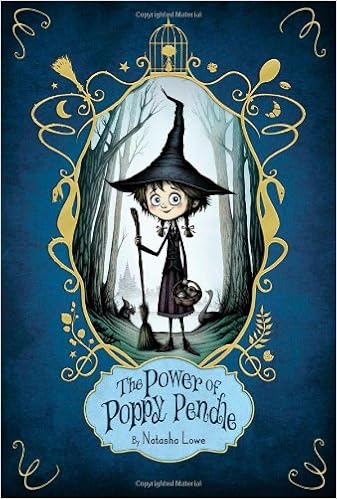
The Power of Poppy Pendle, by Natasha Lowe

Image result for The Power of Poppy Pendle

Poppy Pendle is different really different. Poppy Pendle is magic. She is a witch who doesn't want to be a witch: She doesn't want to brew potions, or cast spells, or ride a broomstick. Flying on a broomstick makes her sick, in fact. Poppy wants to bake instead. Baking is her passion. It is her life, and she is devoted to it, and absolutely extraordinary at it. She was literally born into it... You see, Poppy was born on the floor of Patisserie Marie Claire, a small French bakery.

But her parents have other ideas. For some reason, in Poppy's world, magic is exclusively female, and runs in certain families. The gift of magic occurs to a girl in Poppy's family only every four generations, so Mr. and Mrs. Pendle are very excited.  They want her to pursue a life of magic. They want her to use her gift.

So, rather than sending her to a regular elementary school, they send her to Ruthersfield Academy, a school for witches like Poppy. But Poppy hates Ruthersfield, where everything revolves around magic. Besides, the inside of the building is hot and stuffy. And the other students tease her like there's no tomorrow because she would rather bake cupcakes than cast spells. 

After three years like this, Poppy can't stand it anymore. She runs away to Patisserie Marie Claire (she doesn't realize that she was born there; her parents never told her). Marie Claire Gentille, the woman who runs the patisserie, lets her in, and Poppy stays there for a week before her parents find her and bring her back home. Now Poppy is angry, and rightly so. The patisserie is the only place she has ever felt truly happy, and it has been taken away from her.

The next day, at Ruthersfield, the girls are taught a very special spell, a spell that, when used with enough emotion, could turn something into a solid stone statue. That night Poppy gets into a serious fight with her parents, and she turns them to stone. And her parents aren't the only things to turn to stone: Animals, fish, and other people get changed too, as well as Poppy's own heart.

This is a good book for younger readers, 8 or 9 and up (even though Poppy curses her parents and turns them to stone, the book does have a happy ending). I read this book for the first time in second or third grade, and I thought it was a lot of fun to read. But I hadn't read it in at least 2 years, until this week. I still liked it, but it definitely seemed a bit more childish than the books I like reading nowadays. So maybe kids over age 10 or 11 might feel the same.

However, I still love one of the best parts of this book: the 12 recipes of Poppy's at the end of the novel! 


-------------
Daddy's Afterthoughts: Julia takes a step back from YA titles into a younger read this go-around. This book may be a little much for kids who are just into chapter books, but if your children are already reading longer, substantial YA fare (Harry Potter, The Hunger Games, Golden Compass, The Giver, A Wind in the Door, The Outsiders) then they have probably missed their Poppy Pendle window. Perhaps not coincidentally, Poppy herself is only 10. Lovers of the movie Frozen will recognize touches of Elsa in her magical-power-run-amok-and-throwing-a-hissy-fit-and-shutting-herself-away-from-the-world phase. If Hogwarts had an elementary school, and Elsa attended it, and dressed in all black, she might be Poppy Pendle. Actually, that's not a bad way to think of the book. For readers 8, 9, 10, 11, who are not ready for 500+ page fantasy tomes, this book will do the trick. And some of the recipes do look really yummy.


ABOUT MY BLOG

WELCOME to my blog about books I have read, and books I recommend.

If you are looking for books in the age range of 9-16 (grades 4-10), then maybe I can help you decide which book to read! If you are a stude...